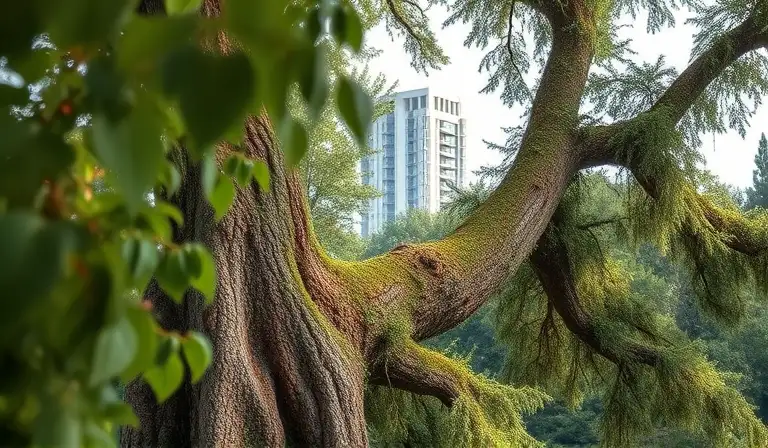
Large Tree Removal Cost Overview
Removing a massive tree from your yard is a major project that requires heavy machinery and expert labor. If you have a tree that is leaning, dead, or blocking a new construction project, you are likely looking at a starting price of $800. For truly massive specimens, that price can climb toward $4,500. This guide breaks down every factor that determines your final bill so you can budget accurately for your tree removal services.
The price of removing a tree depends mostly on its size. Large trees are usually defined as those standing over 60 feet tall. These require more time, more people, and more specialized gear.
| Tree Height | Typical Price Range | Common Examples |
|---|
| Medium-Large (30-60 ft) | $800 – $1,800 | Maples, Birch, Fruit Trees |
| Large (60-80 ft) | $1,500 – $3,000 | Oaks, Pines, Hickories |
| Extra Large (80+ ft) | $2,500 – $5,000+ | Redwoods, Old Growth Oaks |
How Tree Height Impacts Your Bill
Height is the first thing an estimator looks at. A taller tree means a higher risk for the crew. It also means they cannot simply cut the tree at the base and let it fall. In suburban areas, they must climb the tree and cut it into small pieces.
Trees Between 60 and 80 Feet
These trees are common in established neighborhoods. They often hang over roofs or fences. A crew will spend a full day or more on a tree this size. You can expect to pay around $1,500 to $2,500 for a healthy tree in an easy-to-reach spot.
Trees Over 80 Feet
When a tree reaches this height, the equipment needs change. A standard bucket truck might not reach the top. The company might need to bring in a crane tree removal cost service. Crane rentals add a flat fee to the project, often starting at $800 per day.
Location and Accessibility Factors
Where the tree stands in your yard is just as important as how tall it is. A tree in the middle of a five-acre field is cheap to remove because the crew can just fell it in one piece. A tree squeezed between your house and your neighbor's garage is a different story.
- Proximity to Structures: If the tree is within ten feet of a house, the crew must use rigging. This takes a lot of time and requires a highly skilled "ground man" to manage the ropes. Expect a 20% to 30% increase in price.
- Proximity to Power Lines: Working near utility lines is dangerous. Tree services must coordinate with the local power company in some cases. Many companies charge a hazard premium for this.
- Soil and Terrain: Steep hills or swampy soil make it hard to use heavy machinery, forcing the crew to carry logs by hand.
Tree Health and Condition
You might think a dead tree removal cost is cheaper because the tree is lighter. The opposite is often true. Dead trees are brittle and unpredictable.
A climber cannot safely climb a tree that is rotting from the inside. If the wood is too soft to hold a climbing spike, the company must use a crane. This safety requirement can turn a $1,000 job into a $2,500 job instantly.
Price Differences by Tree Species
Not all wood is created equal. The type of tree affects how hard the wood is and how many branches it has.
Hardwood Removal (Oak, Hickory, Walnut)
Hardwoods are dense and heavy. They dull saw blades faster and take more effort to move. An oak (driving up the oak tree removal cost) with a massive canopy has thousands of pounds of extra weight compared to a Pine of the same height. Hardwoods usually sit at the higher end of the price scale.
Softwood Removal (Pine, Spruce, Cedar)
Pines grow tall but are generally narrower. Their wood is softer and easier to cut. Generally, the pine tree removal cost for a 70-foot specimen is cheaper than removing a 70-foot Oak.
Costs for Add-on Services
The "tree removal" line item on your quote usually only covers the act of taking the tree down.
- Stump Grinding: After the tree is gone, you are left with a stump. Standard stump removal cost for grinding ranges between $150 and $500.
- Log Hauling: If you want the wood gone, you will pay a hauling fee and a dump fee at the local landfill. This usually costs between $100 and $300.
DIY vs. Professional Tree Removal
It is tempting to rent a chainsaw and try to do the work yourself. For a large tree, this is a dangerous mistake. Large trees weigh several tons. If a branch falls the wrong way, it can crush a house or kill a person.
Homeowner insurance policies often have clauses that exclude coverage for damage caused by DIY tree work. Professional companies carry multi-million dollar liability insurance to cover these exact situations.
Regional Pricing Trends
Where you live in the United States changes the price. In areas with a high cost of living like New York or San Francisco, labor rates are much higher.
| Region | Estimated Cost (Large Tree) |
|---|
| Northeast | $1,800 – $4,000 |
| Southeast | $1,000 – $2,800 |
| Midwest | $1,200 – $3,200 |
| West Coast | $2,000 – $4,500 |