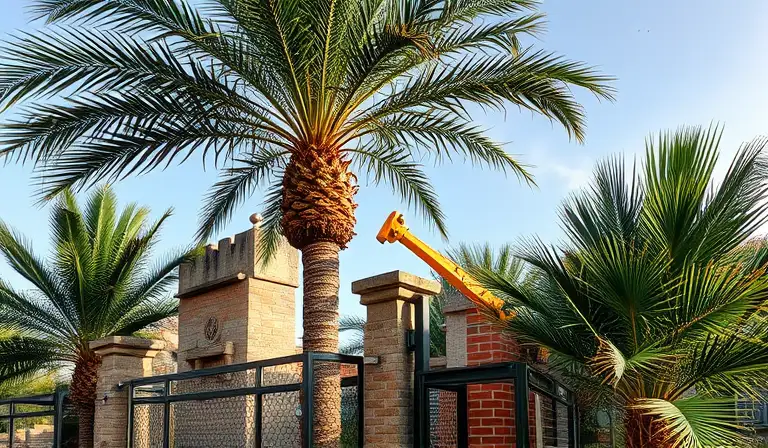
Why Palm Trees Are Different
The palm tree removal cost structure differs significanly from standard hardwoods like oak or maple. unlike deciduous trees, palms don't have a complex branch dipersion system that allows for limb-by-limb removal. Instead, they consist of heavy, water-filled fronds and a single, fibrous trunk.
Some species, like the Phoenix Date Palm, present unique hazards. They feature sharp 4-inch spikes near the crown that can puncture standard work gloves. Removing these spikes requires climbers to wear specialized armor and use heavy bolt cutters, slowing down the process and increasing labor time.
Because palms are monocots (more like grass than wood), their trunks are extremely heavy and wet. Disposal fees at landfills are often higher because palm wood shreds poorly in standard chippers, jamming machinery. This "disposal surcharge" is often passed on to the homeowner.
Cost Factors for Palm Removal
Height and Accessibility
Height is the primary multiplier. A small tree removal cost for a Pygmy Date Palm (under 15ft) is negligible, often $150-$300. However, a 60ft Mexican Fan Palm usually requires a bucket truck or climber, pushing prices to $600-$1,100.
Falling Hazards
For coconut tree removal cost estimates, the presence of fruit is a major factor. A 60ft coconut palm loaded with 50lbs of nuts poses a deadly risk to targets below. All fruit must be manually cut and lowered before the tree can be felled, adding 1-2 hours of labor.
Transplanting vs Removal
Unlike oaks or pines, palms have a compact root ball that makes them candidates for transplanting. If your palm is healthy and a desirable species (like a Canary Island Date Palm), a landscaping company might actually pay you for it, or at least remove it for free. Always ask if your tree has resale value before paying for removal.